

Do your joints make you think twice before a walk, a flight of stairs or even opening a jar? When pain sets in, you often look for what you can change yourself: on your plate, in your habits, in the way you move.
Diet has a role, but it isn’t everything. For osteoarthritis, tailored exercise and, where needed, supported weight management are among the essential measures. No menu or supplement can currently promise to rebuild cartilage.[1, 2]
Here’s how to act with concrete goals: more comfort, keeping your independence and continuing the activities that matter to you.

Key Takeaways
- Get the diagnosis confirmed first.
- Move with a tailored programme.
- Eat a varied diet. No food repairs cartilage.
- Overweight? Talk about it, without a crash diet.
- A supplement? Check for interactions.
- Hot, swollen joint? Seek help quickly.
Osteoarthritis: what can you do naturally to live better day to day?
Where do you start when advice seems to point in every direction? Keep it simple: confirm the cause of the pain, then build a care plan that fits your situation, the joint involved and any other health problems.
A natural approach can complement prescribed care: you don’t have to choose between the two. Pain that isn’t well controlled deserves a review with your doctor.
Osteoarthritis vs rheumatoid arthritis: are they the same disease?
Heard people talk about “arthritis” or “rheumatism” without knowing exactly what they mean? These words cover many different conditions affecting the joints and muscles. They aren’t a precise diagnosis.
Osteoarthritis affects the whole joint. It involves damage to the cartilage, changes in the bone underneath and sometimes inflammation of the synovial membrane.[2]
These distinctions matter. Dietary advice suited to someone with gout doesn’t automatically apply to osteoarthritis. Pain near a joint can also come from a tendon: our article on tendonitis and how to treat it explains that other situation.
Before piling up remedies, make sure you know what’s causing your symptoms.
What is the best diet for osteoarthritis?
What if your first change was to enrich your meals rather than draw up a list of banned foods? A varied diet is an easier foundation to stick to.
European recommendations encourage a healthy, balanced diet for people with rheumatic diseases. They also stress that the proven effects of specific foods or nutrients on these conditions are generally limited. Eating better doesn’t mean directly treating cartilage.[5]
{{cta}}
How do you build a varied plate without looking for a miracle food?
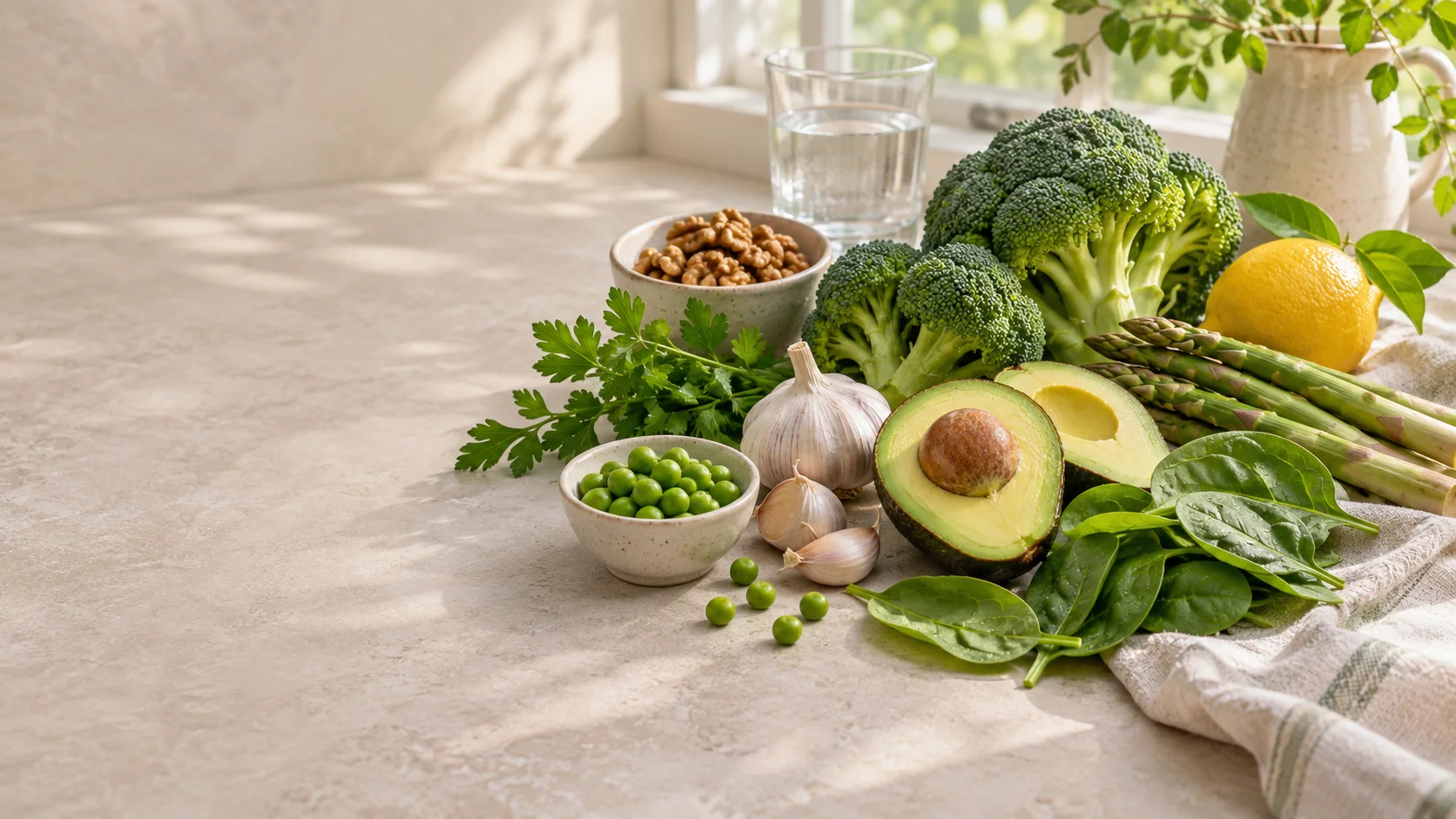
What should go in your basket this week? Take inspiration from healthy-eating guidelines for adults: more plants, a variety of protein sources, wholegrain starchy foods and well-chosen fats.[6]
Picture a lentil salad, a few vegetables and an olive-oil dressing. Nothing exotic or particularly expensive. You can start from what you already enjoy and improve your habits gradually.
Which foods should you avoid with osteoarthritis?
Could tomatoes, bread or dairy be behind all your pain? Be wary of universal lists of “forbidden” foods: the guidelines consulted don’t recommend a systematic exclusion diet for osteoarthritis.
Cutting down isn’t the same as cutting out, and enjoying your food still matters. To go further, our guide to the anti-inflammatory diet sets out its principles and limits.
{{clutser}}
What might a day of meals look like?
Looking for a concrete example? Here’s a suggestion to adapt to your appetite, tastes and needs.
This menu shows one possible way to organise your day. It isn’t a weight-loss diet or a treatment for pain. If you’re losing weight without trying or eating very little, get support before cutting your portions.
When can weight loss help?
Should you lose weight as soon as a joint hurts? No: this advice is for people living with overweight or obesity, when it’s relevant to their care.
If your weight is already healthy, focus on the quality of your diet and on exercise. The number on the scales isn’t a universal goal.
How can you move without overloading a painful joint?
Worried that moving will inevitably make your osteoarthritis worse? Tailored activity is part of its treatment. It can help reduce pain and preserve your everyday abilities.[3]
At first, some exercises may cause discomfort: mention it so the session can be adjusted. Severe, unusual or worsening pain shouldn’t be ignored.
Do heat, cold and everyday aids help?
Does your joint feel better after a warm shower? Heat or cold can ease some symptoms for some people.[3]
The right adjustment is the one that helps you do something useful with less difficulty.
What can you expect from supplements?
Could a capsule replace exercise or regrow cartilage? None of the sources used here justifies a promise like that.
A supplement therefore deserves precise questions: which formula was studied, in which people, and with what result on pain or function?
If you’re considering AISA Moleculum Capsules, read the product information and ask your doctor or pharmacist to check they are compatible with your treatments. This article does not show that they work for osteoarthritis.
How do you build a routine you can stick to?
Ever started several changes at once, then dropped them all? You can move forward more gradually.
Look for a routine that fits your life. A simple, repeated habit is more realistic than a programme that wears you out. If pain stops you from making the effort, ask for your care plan to be reviewed.
When should you see a doctor about joint pain?
Has the pain changed suddenly, or does it feel different from your usual symptoms? Don’t automatically put it down to osteoarthritis.
A diagnosis is what allows the right care to be chosen.
Sources
- NICE, guideline NG226, “Osteoarthritis in over 16s: diagnosis and management”, 2022. nice.org.uk
- NHS, “Osteoarthritis”. nhs.uk
- NHS, “Osteoarthritis – Treatment and support”. nhs.uk
- NHS, “Rheumatoid arthritis”. nhs.uk
- EULAR, 2021 recommendations for lifestyle behaviours and work participation in rheumatic and musculoskeletal diseases, Annals of the Rheumatic Diseases. ard.bmj.com
- NHS, “Eating a balanced diet”. nhs.uk
- NIH, NCCIH, “Turmeric: Usefulness and Safety”. nccih.nih.gov
- ANSES (French Agency for Food, Environmental and Occupational Health & Safety), opinion on warnings for herbal food supplements, request 2019-SA-0155, 2022 (in French). anses.fr
- NHS, “Joint pain”, reviewed 26 February 2026. nhs.uk
- French Society of Rheumatology, recommendations on diet and chronic inflammatory rheumatic diseases (in French). em-consulte.com
You might be interested in this product
Anti-inflammatory capsules
«Inside-out» dietary supplement supports the integrity of the intestinal barrier and a balanced microbiome, helping to manage stress. 2 to 4 capsules daily on an empty stomach. Content corresponds to a take for 2–3 weeks. European clinical study on 138 healthy patients aged 65–85, for 45 days.

TARIF
€
120.00
A European clinical study involving 138 healthy patients (ages 65–85).


FAQ
Everything you need to know before placing an order: simple and clear.
Can osteoarthritis be cured naturally?
No. Drug-free measures can ease symptoms and improve daily life, but they can’t promise a cure or rebuild cartilage.[2, 3]
What is the best food for osteoarthritis?
No food has that status. Choose a balanced, varied diet suited to your needs, rather than eating large amounts of one product sold as a miracle.[5, 6]
Is an anti-inflammatory diet good for arthritis?
Eating a varied, plant-rich diet fits the healthy-eating advice given to people with rheumatic diseases, but its direct effects on these conditions remain limited.[5] Our anti-inflammatory diet guide explains the principles and limits.
Can omega-3s replace a treatment?
No. Whether they have a role depends on the context and the disease. Dietary advice doesn’t replace treatment, especially for a chronic inflammatory rheumatic disease.[5, 10]
Should you stop walking if your knee hurts?
Not necessarily: activity should be adapted. During a major flare-up, reduce the strain; when things are calmer, resume as advised. New or severe pain needs medical advice.[3]
How long before you notice an improvement?
There’s no guaranteed timeframe. Results depend on your situation and the programme you follow. Review your comfort and abilities regularly with the professional supporting you.
Latest posts
Did you enjoy this latest article? If so, you might be interested in this selection.









Ready to slow down the aging process?
Sign up for our newsletter and join the thousands of people who follow us to regain energy, vitality, and well-being.

Your cart summary
Product Name
$0
$0
-
Thank you! Your submission has been received!
Oops! Something went wrong while submitting the form.
+
Success message won't be visible to user. Coupon title will be listed below if it's valid.
Coupon1
Coupon2
Success message won't be visible to user.
Error message won't be visible to user.