Have you ever had that feeling of being at the end of your rope, without really knowing why?
Stress has become one of the most widespread afflictions of our time. And yet, we often wait far too long before doing anything about it. Until the day the body says stop: anxiety, sleep disturbances, rising blood pressure… burnout.
These signals don’t come out of nowhere. They’re the result of a stress level ignored for too long.
The good news? There are natural techniques, effective ones, to reduce stress in your daily life. Deep breathing, physical activity, mindfulness, balanced nutrition, and certain plants… In this article, you’ll find concrete solutions, grounded in research, to restore genuine emotional balance without a prescription.
Ready to take back control?

Key Takeaways
- Chronic stress keeps your body on alert.
- Move regularly, at your own pace.
- Slow breathing calms you within minutes.
- Sleep is your first recovery tool.
- Supplements come after the basics.
- Ask for help when stress persists.
What Is Stress and Why Is It So Hard to Control?
Stress is the body’s alarm response to a situation perceived as threatening. It’s a useful survival mechanism, as long as it switches off. The problem is when it stops switching off.
Why is it so hard to control? Because your brain doesn’t always distinguish between a real danger and a simple anxious thought. It goes into alert mode. And if that signal persists, it settles in for good.
What Physical and Emotional Symptoms Should You Recognize?
Stress shows up in the body, in the mind and in everyday behaviour. These symptoms shouldn’t be dismissed as trivial. The sooner you recognize them, the sooner you can act.[1]
What’s the Difference Between Acute and Chronic Stress?
Acute stress is intense but brief: public speaking, bad news. The body returns to normal once the trial has passed. Chronic stress, on the other hand, sets in when stressful situations pile up without ever being resolved. Day after day, the nervous system stays on high alert. No pause. No recovery. That’s where the real risks take hold.
What Actually Happens in Your Body When You’re Stressed?
The moment your body perceives a threat, it triggers a cascade of biological reactions. The brain activates the adrenal glands, which release stress hormones: adrenaline and, above all, cortisol. In small amounts, cortisol is your ally. But with chronic stress, its level can stay elevated and its daily rhythm can be disrupted. Over time, this is linked to weaker immune defences, higher blood pressure, a more fragile gut barrier, and effects on memory, mood and sleep.[2, 3] The good news? Many of these changes can improve when stress eases and recovery returns.
What Are the Health Consequences of Chronic Stress?
When chronic stress takes hold, it is associated with low-grade, “silent” inflammation in the body. It is invisible, and over time it can affect many organs. Research links chronic stress to depression, burnout, cardiovascular disease, weaker immune defences and faster cellular ageing.[2, 4]
Can Stress Raise Cholesterol Levels?
Possibly. Cortisol is made from cholesterol, but producing more cortisol does not simply “use up” cholesterol. The link runs through other routes: stress hormones change how the body handles fats and sugar, and stress often comes with poorer sleep, comfort eating or smoking. In a study of more than 90,000 Spanish workers, those who found it hard to cope with their job more often had high LDL (“bad”) cholesterol and low HDL (“good”) cholesterol.[5] This is an association, not proof of cause. Managing stress is still one part of looking after your cardiovascular health.
{{cta}}
Can Stress Cause Liver Pain?
Not directly. Liver pain is not a recognised symptom of stress, but research does show indirect links. In healthy volunteers, acute psychological stress made the gut barrier more permeable, the phenomenon sometimes called leaky gut.[3] Whether this overloads the liver in everyday life has not been shown. A large study also associated high perceived stress with fatty liver disease, a buildup of fat in the liver.[6] Taking care of your emotional balance is also part of taking care of your liver.
Why Are Some People More Vulnerable Than Others?
Genetics, personal history, lifestyle and self-esteem all play a role in stress resilience.[2] Insufficient sleep, an unbalanced diet or a lack of regular physical activity weaken your natural defences. The good news? Several of these factors can be trained.
How Can You Fight Stress Naturally Every Day?
There’s no miracle cure for stress. But simple habits, practised regularly, make a real difference. The key is consistency.
{{cluster}}
Why Is Exercise One of the Most Powerful Natural Stress Relievers?
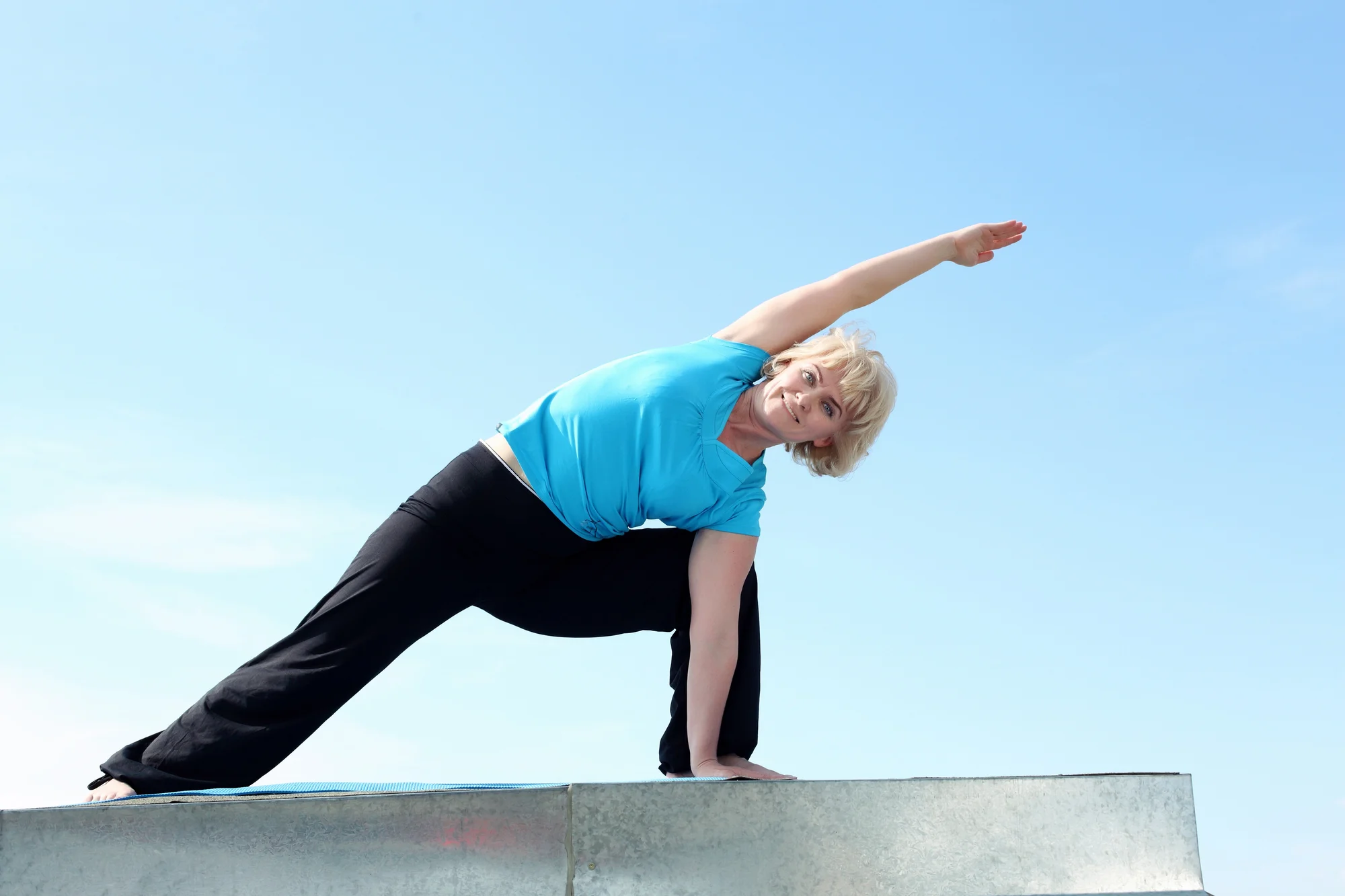
Physical exercise releases endorphins, helps regulate stress hormones, improves sleep quality and releases built-up muscle tension. A large overview of 97 reviews found that physical activity clearly reduced symptoms of depression, anxiety and psychological distress, whatever the type of exercise.[7] The WHO recommends at least 150 to 300 minutes of moderate activity per week for adults, for example 20 to 40 minutes a day.[8] Walking, cycling, swimming, yoga, dancing… what matters is moving regularly.
How Does Deep Breathing Act on the Nervous System?
Deep, slow breathing activates the parasympathetic nervous system. By breathing slowly, around six breaths per minute, you stimulate the vagus nerve, a key regulator of stress; studies observe more relaxation and less anxiety and arousal.[9] The calming effect is often felt within minutes. Try it: inhale for a few seconds, hold briefly, then exhale for longer, at your own rhythm. Repeat 5 to 10 times.
How Does Meditation Help Calm Tension?
Practising mindfulness means learning to observe your thoughts without being swept away by them. In a 2022 trial of 276 adults with an anxiety disorder, an 8-week mindfulness program (MBSR) reduced anxiety as much as a standard medication.[10] A meta-analysis also found that meditation lowered cortisol, mainly in people at higher risk, such as those under heavy stress.[11] 10 minutes a day is enough to get started. Not the duration, but the regularity counts.
Why Is Sleep Essential to Nervous System Balance?
Cortisol naturally reaches its lowest level in the first part of the night, during deep sleep, then rises again towards morning to help you wake. Without quality sleep, the nervous system stays in a state of alert, and sleep loss and stress feed each other.[12] Go to bed at fixed times, avoid screens for an hour before sleeping, and practise a relaxation technique in the evening. Good sleep is the foundation of nearly everything.
How Can You Stop Stress and Anxiety Quickly?
When stress spikes suddenly, several techniques can calm the nervous system within minutes. The 5-4-3-2-1 method is a grounding exercise widely taught by therapists. It has been studied little on its own, but it anchors your attention in the present moment and can break an anxious spiral.
Jacobson’s progressive muscle relaxation is another option: tense each muscle group for about 5 seconds, then release all at once, working progressively from the hands to the shoulders. Positive visualization works on a similar principle: imagine a safe place that sends signals of calm to your nervous system. In a randomised study, a single session of progressive muscle relaxation, deep breathing or guided imagery each increased feelings of relaxation.[13]
How Can You Manage Stress at Work and Stop Ruminating?
Work-related stress is a major cause of emotional exhaustion, and the WHO now publishes guidelines to prevent it.[14] To protect yourself, set fixed hours for checking messages, create transition rituals between work life and personal life, and learn to say no. Breaks aren’t a waste of time: they’re a condition of your effectiveness.
To break the cycle of rumination, try the 2-minute rule: if you can act on a problem right now, act. Otherwise, write it down and move on. Writing, meditation and physical movement are also powerful ways to interrupt anxious spirals.
To manage emotional stress, start by naming your emotions: putting feelings into words can reduce their intensity.[15] Identify your triggers. Build a self-care routine. And if stress persists, consult a doctor or a psychologist without delay.[1]
What Is the Most Powerful Natural Stress Reliever?
There’s no single all-powerful natural stress reliever, but rather a combination of solutions that, together, make a real difference. Among plants, rhodiola rosea, passionflower and valerian are the best known, and saffron has been studied for mood. Their evidence is far more limited than for exercise, breathing or sleep.[16, 17, 18]
Diet plays a role too. About 90% of the body’s serotonin is produced in the gut, and gut bacteria influence this production.[19] This gut serotonin does not reach the brain directly, but the gut and the brain communicate constantly through the gut-brain axis. Favour leafy greens rich in magnesium, oily fish (omega-3s), fermented foods for the microbiome, bananas and nuts (tryptophan, potassium). Limit alcohol: it disturbs sleep and is not a good way to cope with stress.[1]
As dietary supplements, magnesium, rhodiola rosea and psychobiotics (probiotics, sometimes combined with prebiotics, studied for their effects on mood) are popular.[20] A systematic review suggests magnesium may help people prone to anxiety, but the studies are of poor quality.[21] Always ask your doctor or pharmacist before starting, especially if you take medication.
What Are the 4 Pillars of Stress Reduction?
We often look for complicated solutions. But stress reduction rests on four fundamental pillars. Simple. Accessible. And remarkably effective when combined.
These 4 pillars don’t work in isolation. They reinforce one another. It’s their synergy that builds real resilience against everyday stress.
Recovering from chronic stress takes time: often several weeks, and several months or more after burnout. There is no fixed timeline. Sleep, gentle physical activity, a protective diet and professional support all help this process.
To prevent stress before it takes hold: move at least 3 times a week, get enough sleep, take breaks, nurture your social ties, and build a relaxation practice into your routine. Even 10 minutes a day makes a real difference. Consult a doctor or psychologist if symptoms persist despite your efforts.[1] Acting early means protecting your quality of life for the long term.
Sources
- NHS, “Stress”, page reviewed 6 March 2026. nhs.uk
- Lupien SJ, McEwen BS, Gunnar MR, Heim C. Effects of stress throughout the lifespan on the brain, behaviour and cognition. Nature Reviews Neuroscience, 2009;10(6):434-445. DOI 10.1038/nrn2639. pubmed.ncbi.nlm.nih.gov
- Vanuytsel T et al. Psychological stress and corticotropin-releasing hormone increase intestinal permeability in humans by a mast cell-dependent mechanism. Gut, 2014;63(8):1293-1299. DOI 10.1136/gutjnl-2013-305690. pubmed.ncbi.nlm.nih.gov
- Epel ES et al. Accelerated telomere shortening in response to life stress. PNAS, 2004;101(49):17312-17315. DOI 10.1073/pnas.0407162101. doi.org
- Catalina-Romero C et al. The relationship between job stress and dyslipidemia. Scandinavian Journal of Public Health, 2013;41(2):142-149. Summary: eurekalert.org
- Kang D et al. Perceived stress and non-alcoholic fatty liver disease in apparently healthy men and women. Scientific Reports, 2020;10:38. DOI 10.1038/s41598-019-57036-z. doi.org
- Singh B et al. Effectiveness of physical activity interventions for improving depression, anxiety and distress: an overview of systematic reviews. British Journal of Sports Medicine, 2023;57:1203-1209. DOI 10.1136/bjsports-2022-106195. bjsm.bmj.com
- World Health Organization, “Physical activity” (recommendations for adults). who.int
- Zaccaro A et al. How breath-control can change your life: a systematic review on psycho-physiological correlates of slow breathing. Frontiers in Human Neuroscience, 2018;12:353. DOI 10.3389/fnhum.2018.00353. pmc.ncbi.nlm.nih.gov
- Hoge EA et al. Mindfulness-based stress reduction vs escitalopram for the treatment of adults with anxiety disorders: a randomized clinical trial. JAMA Psychiatry, 2023;80(1):13-21. DOI 10.1001/jamapsychiatry.2022.3679. doi.org
- Koncz A, Demetrovics Z, Takacs ZK. Meditation interventions efficiently reduce cortisol levels of at-risk samples: a meta-analysis. Health Psychology Review, 2021;15(1):56-84. DOI 10.1080/17437199.2020.1760727. pubmed.ncbi.nlm.nih.gov
- Hirotsu C, Tufik S, Andersen ML. Interactions between sleep, stress, and metabolism: from physiological to pathological conditions. Sleep Science, 2015;8(3):143-152. DOI 10.1016/j.slsci.2015.09.002. pmc.ncbi.nlm.nih.gov
- Toussaint L et al. Effectiveness of progressive muscle relaxation, deep breathing, and guided imagery in promoting psychological and physiological states of relaxation. Evidence-Based Complementary and Alternative Medicine, 2021:5924040. DOI 10.1155/2021/5924040. doi.org
- World Health Organization, WHO guidelines on mental health at work, 2022. ncbi.nlm.nih.gov
- Lieberman MD et al. Putting feelings into words: affect labeling disrupts amygdala activity in response to affective stimuli. Psychological Science, 2007;18(5):421-428. DOI 10.1111/j.1467-9280.2007.01916.x. doi.org
- NCCIH (US National Institutes of Health), “Rhodiola: Usefulness and Safety”, updated April 2025. nccih.nih.gov
- European Medicines Agency, herbal monographs “Passiflorae herba” and “Valerianae radix”. ema.europa.eu
- Marx W et al. Effect of saffron supplementation on symptoms of depression and anxiety: a systematic review and meta-analysis. Nutrition Reviews, 2019;77(8):557-571. DOI 10.1093/nutrit/nuz023. doi.org
- Yano JM et al. Indigenous bacteria from the gut microbiota regulate host serotonin biosynthesis. Cell, 2015;161(2):264-276. DOI 10.1016/j.cell.2015.02.047. pubmed.ncbi.nlm.nih.gov
- Dinan TG, Stanton C, Cryan JF. Psychobiotics: a novel class of psychotropic. Biological Psychiatry, 2013;74(10):720-726. DOI 10.1016/j.biopsych.2013.05.001. pubmed.ncbi.nlm.nih.gov
- Boyle NB, Lawton C, Dye L. The effects of magnesium supplementation on subjective anxiety and stress: a systematic review. Nutrients, 2017;9(5):429. DOI 10.3390/nu9050429. eprints.whiterose.ac.uk
- d’Alessio PA, Bisson JF, Béné MC. Anti-stress effects of d-limonene and its metabolite perillyl alcohol. Rejuvenation Research, 2014;17(2):145-149. DOI 10.1089/rej.2013.1515. doi.org
- Holt-Lunstad J, Smith TB, Layton JB. Social relationships and mortality risk: a meta-analytic review. PLoS Medicine, 2010;7(7):e1000316. DOI 10.1371/journal.pmed.1000316. doi.org
- Yang YC et al. Social relationships and physiological determinants of longevity across the human life span. PNAS, 2016;113(3):578-583. DOI 10.1073/pnas.1511085112. pubmed.ncbi.nlm.nih.gov
- Alimujiang A et al. Association between life purpose and mortality among US adults older than 50 years. JAMA Network Open, 2019;2(5):e194270. DOI 10.1001/jamanetworkopen.2019.4270. doi.org
You might be interested in this product
Anti-inflammatory capsules
«Inside-out» dietary supplement supports the integrity of the intestinal barrier and a balanced microbiome, helping to manage stress. 2 to 4 capsules daily on an empty stomach. Content corresponds to a take for 2–3 weeks. European clinical study on 138 healthy patients aged 65–85, for 45 days.

TARIF
€
120.00
A European clinical study involving 138 healthy patients (ages 65–85).

FAQ
Everything you need to know before placing an order: simple and clear.
What Are the 4 Pillars of Stress Reduction?
Stress reduction rests on four pillars that work together: movement, regular physical activity that helps regulate stress hormones; relaxation, with practices such as deep breathing, meditation, yoga or sophrology that activate the parasympathetic nervous system; social connection, which is associated with lower inflammation and better emotional balance; and meaning, having projects and feeling useful. It is their combination, day after day, that builds real stress resilience.[7, 23, 25]
What Is the 5-4-3-2-1 Method?
It is a quick grounding technique based on the five senses. Name 5 things you see, 4 things you can touch, 3 things you hear, 2 things you can smell and 1 thing you can taste. It brings your attention back to the present moment and can interrupt a spiral of anxiety. It has been studied little on its own, and it does not replace care if you have repeated panic attacks.
Can Stress Raise Cholesterol Levels?
Possibly. Large studies find that people under work-related stress more often have high LDL and low HDL cholesterol. Cortisol is made from cholesterol, but the link mainly runs through how stress hormones change fat metabolism, and through habits that often come with stress, such as poor sleep, comfort eating or smoking. It is an association, not proof of cause. Managing stress is one part of protecting your cardiovascular health.[5]
Can Stress Cause Liver Pain?
Not directly: liver pain is not a recognised symptom of stress. Acute stress can make the gut barrier more permeable, and high perceived stress is associated with fatty liver disease, but neither shows that stress causes liver pain. Pain under the right ribs deserves a medical check-up.[3, 6]
What Is the Most Powerful Natural Stress Reliever?
There is no single universal stress reliever, but a combination of habits. Regular physical activity is the best documented. Slow breathing and mindfulness calm the nervous system within minutes to weeks. Plants such as rhodiola, passionflower or valerian are popular, but their evidence is limited, and magnesium has only poor-quality studies. Their real power lies in combining these habits, with medical advice before any supplement.[7, 16, 21]
Latest posts
Did you enjoy this latest article? If so, you might be interested in this selection.

Ready to slow down the aging process?
Sign up for our newsletter and join the thousands of people who follow us to regain energy, vitality, and well-being.

Your cart summary
Product Name
$0
$0
-
Thank you! Your submission has been received!
Oops! Something went wrong while submitting the form.
+
Success message won't be visible to user. Coupon title will be listed below if it's valid.
Coupon1
Coupon2
Success message won't be visible to user.
Error message won't be visible to user.