
Gut, Brain & Skin Axis
Why does your skin react when you're stressed? Why does your mood depend on your digestion? It's all connected.
Your gut, your second brain
You’ve probably already heard the expression «having butterflies in your stomach» or «a gut-wrenching feeling». It’s not a metaphor.
Your gut contains 500 million neurons, as many as in your spinal cord. It’s called the enteric nervous system, but essentially, it’s your second brain.
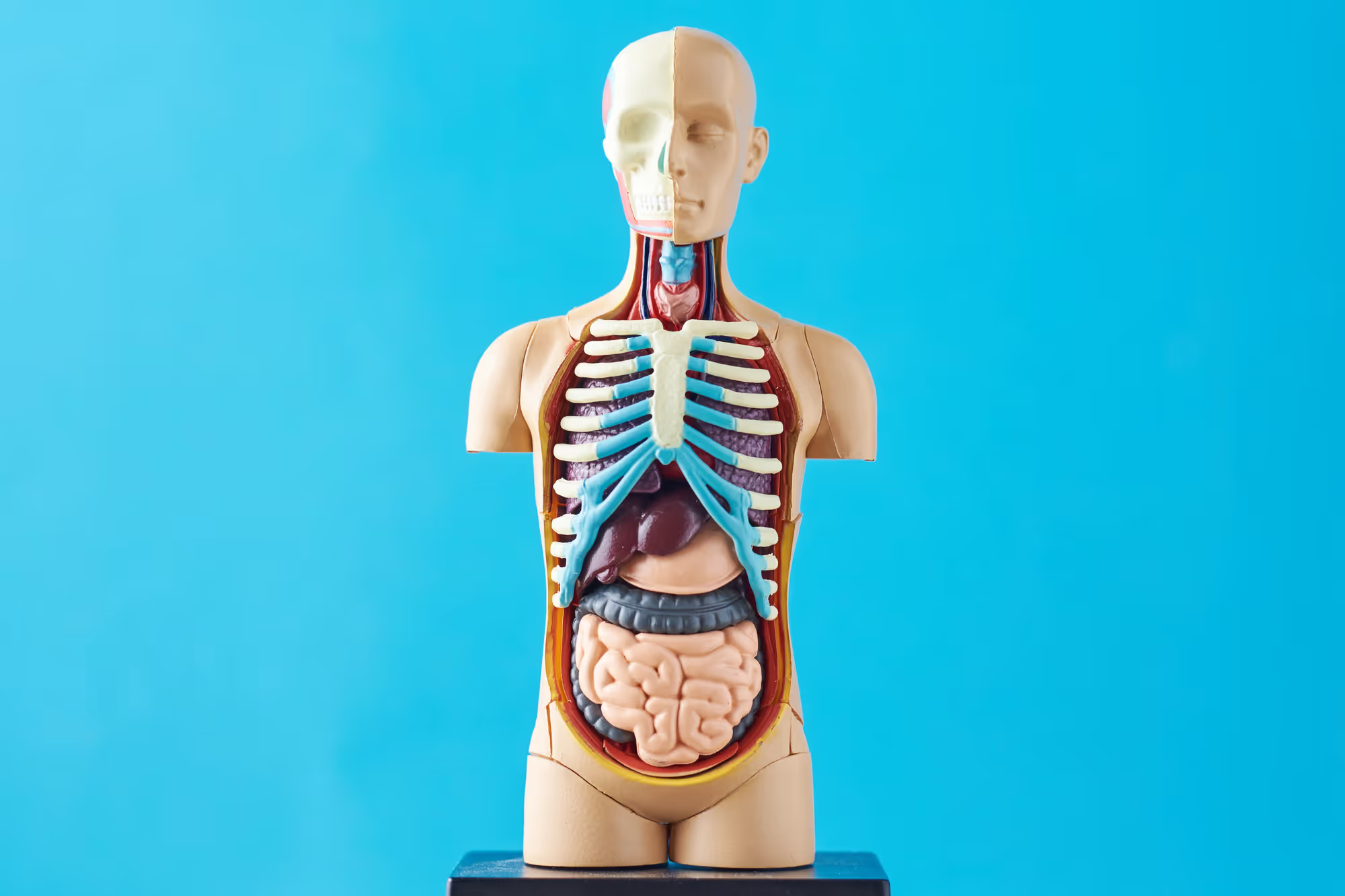
This second brain doesn’t just handle digestion. It constantly communicates with your «real» brain via the vagus nerve, an information highway that connects your gut to your head.
The Gut-Brain Connection
Your gut and your brain communicate both ways:
From the brain to the gut
Are you stressed? Your brain sends a signal to your gut.
Result: spasms, cramps, bloating, diarrhea, or constipation. That’s why stress gives you a stomach ache.
From the gut to the brain
Your gut produces neurotransmitters (serotonin, dopamine, GABA) that influence your mood and motivation, and can generate anxiety when imbalanced.
A disrupted gut barrier = low mood (irritability)
Studies show that:
- People with depression often have an impoverished microbiome
- Anxiety disorders are often linked to gut issues
- Improving your microbiome can improve mood
The microbiome: your inner garden
You have 100 trillion bacteria in your gut. That’s 10 times more than the number of cells in your entire body. These bacteria make up your microbiota.
A balanced microbiota means:
- Good digestion — no bloating, regular transit
- A strong immune system — 70% of your immunity comes from the gut
- A solid intestinal barrier — filtering what passes into tissues and the bloodstream
- Optimal neurotransmitter production — better mood, energy, and even euphoria
An imbalanced microbiome (called «dysbiosis») means:
- Chronic inflammation
- Increased intestinal permeability (the gut becomes «leaky»)
- Toxins passing into tissues and the bloodstream
- Weakened or over-reactive immune system (mucosal immunity)
- Neuroinflammation (when inflammation crosses the blood–brain barrier)
- Low mood
- Anxiety
- Chronic fatigue
- Depression
- Difficulty in concentrating
- Memory issues
- Obsessive thoughts
And what about the skin?
Your skin is a reflection of your gut health. When your gut isn’t functioning properly, it shows on your face.
Why? Because:
- Intestinal inflammation creates systemic inflammation — which can extend to the skin
- A disrupted microbiome weakens immunity — leading to acne, eczema, psoriasis
- Toxins pass into the bloodstream via the gut — which the skin then tries to eliminate
Signs of a disrupted Gut–Skin connection:
- Acne — especially on the chin and jawline
- Rosacea — redness, visible blood vessels
- Eczema, atopic dermatitis, psoriasis — inflammatory patches
- Dull, grayish skin — lack of radiance
- Accelerated aging — wrinkles, loss of elasticity
Studies have shown that 40% of people with acne also have gut issues. This is not a coincidence.
The Gut–Brain–Skin triangle
Here’s how the cycle works:
1. You are stressed and therefore inflamed (silent inflammation)
→ Your brain receives peripheral signals due to a leaky gut
→ Your gut becomes permeable and inflamed under the effect of cortisol induced by stress
2. Your brain signals the skin
→ Your skin reacts (acne, redness, accelerated aging)
→ Inflammation becomes visible
3. Your skin is in bad shape
→ You are stressed about your appearance
→ Your mood is deteriorating
→ Back to step 1
How can we repair the gut-brain-skin axis?
1. Rebalance your microbiome
Eat prebiotics, meaning fiber (vegetables, fruits, whole grains, garlic, onion, banana), and probiotics (yogurt, kefir, sauerkraut).
This single action helps reduce inflammation (thanks to SCFAs produced during fiber digestion) and promotes the production of dopamine, serotonin, and GABA.
2. Further reduce intestinal inflammation
You can support it by avoiding ultra-processed foods, excess sugar, and alcohol. Prioritize omega-3s (fatty fish, nuts).
3. Manage stress
Your gut feels your stress, so it’s important to establish a daily routine including breathing practices, cardiac coherence, quality sleep, and physical exercise.
4. Support the intestinal barrier
Thanks to the work of Dr. D’Alessio, it is possible to repair the intestinal barrier and improve the microbiome while delivering a powerful yet non-toxic anti-inflammatory effect.
AISA d-limonene is also a dopaminergic molecule and helps improve mood.
How AISA acts on the Gut, Brain & Skin axis
AISA d-Limonene reduces intestinal inflammation, improves microbiota diversity, and strengthens the intestinal barrier. By acting at the source (the intestine), it improves both your mood and your skin.
