
Senescence & Inflammaging
Why do you age? It’s not just «the passing of time». It’s your senescent cells that add to the inflammation that’s already there.
What is aging ?
Aging is not just about wrinkles or gray hair. It is a biological process that takes place inside your organs.
Your cells are programmed to renew themselves throughout your life, at different replication rates, depending on the type of cells. At each division, they copy their DNA — this is called cellular replication. But over time, the quality of these cellular components degrades, much like making a photocopy of a photocopy.
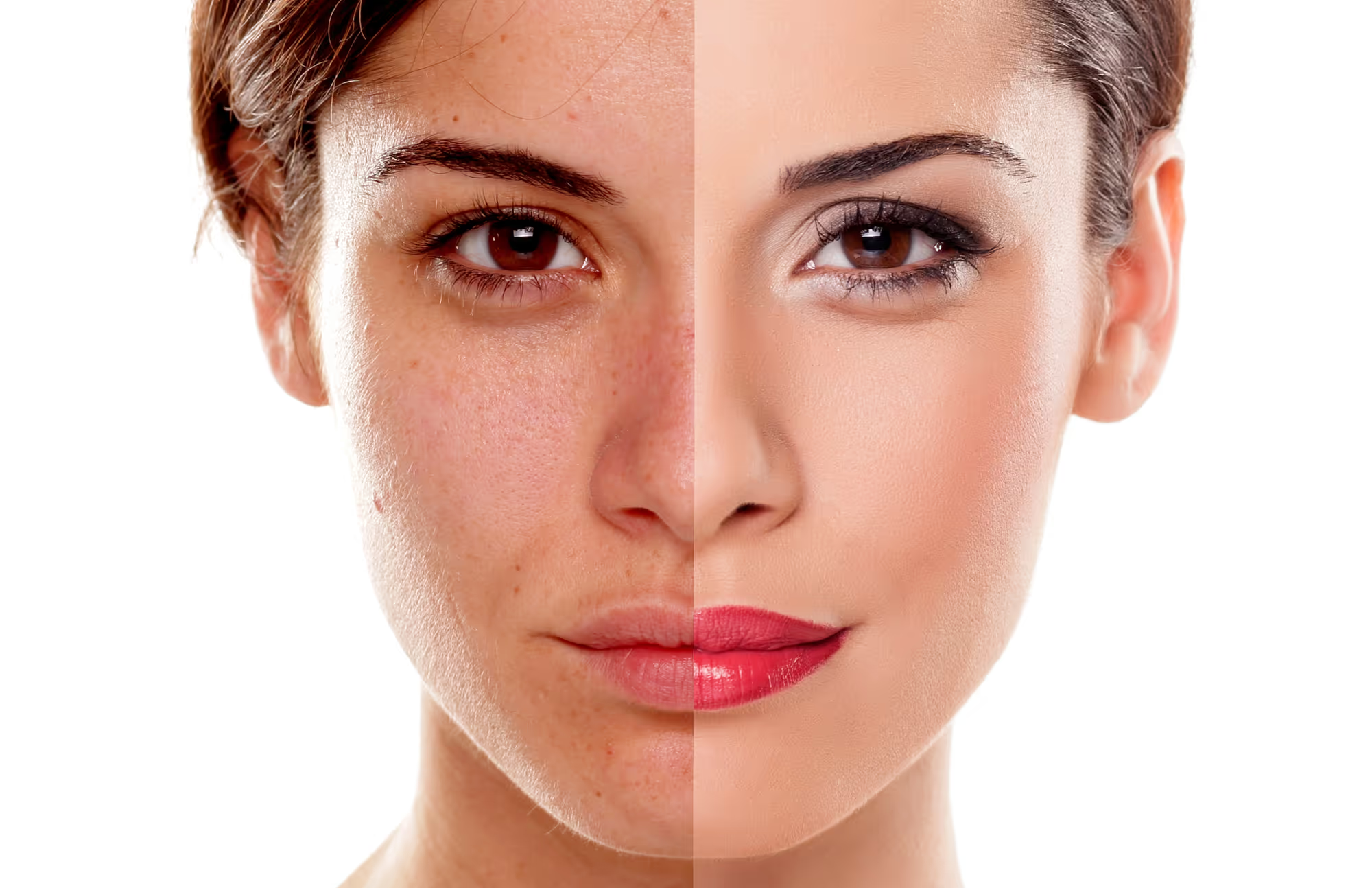
After a certain number of replications, cells stop dividing. They enter a phase known as replicative cell senescence.
Senescent cells: secretory «factories» in your body
A senescent cell is a cell that does not die, but no longer functions properly.
Imagine employees who no longer work but remain in the office. Worse: they spend their time bothering other employees, creating chaos. However, senescent cells also play an important role as a defense against tumor cells.
They secrete inflammatory molecules (cytokines), enzymes, and hormones and Reactive Oxygen Species (ROS) that disrupt neighboring cells through the entire body. This is called the SASP (Senescence-Associated Secretory Phenotype). In other words, they continuously release toxic and pro-inflammatory elements.
Inflammaging: aging driven by chronic inflammation
The word «inflammaging» comes from inflammation + aging. It reflects the idea that chronic inflammation is the main cause of aging.
All age-related diseases share inflammation as a common factor:
- Cardio-metabolic diseases — inflammation of the arteries, type 2 diabetes, and obesity
- Alzheimer’s as well as most neuro-degenerative diseases — inflammation of the brain
- Osteoarthritis — inflammation of the joints
- Cancer — chronic inflammation promoting mutations
- Skin aging — inflammation that breaks down collagen
It’s not age itself that causes these diseases. It is silent chronic inflammation that allows the signs of aging to accumulate.
Where do senescent cells come from?
1. Natural aging
Natural aging begins at birth. At 20, you have very few senescent cells. By 60, they represent about 3% of your cells. The older you get, the more aggressive they become.
2. Oxidative stress
When your cells produce energy, they generate free radicals (originally meant for antibacterial and antiviral immune functions). If you produce too many free radicals and not enough antioxidants, you accelerate the senescence of your cells.
3. Chronic inflammation
Again, chronic inflammation accelerates senescence. And senescent cells, in turn, create more inflammation. A vicious cycle.
4. Stress and cortisol
Chronic stress increases cortisol production by the adrenal glands. Over time, this effect, among others, makes the intestinal barrier permeable and allows circulating toxins to directly reach the tissues. This leads to widespread inflammation throughout the body.
5. Stress and telomeres
Chronic stress also shortens your telomeres (the «caps» at the ends of your chromosomes that protect your DNA).
Shortened telomeres lead to cells that age faster.
6. Lifestyle
Processed diet, lack of physical activity, lack of sleep, tobacco, alcohol… All of this accelerates cellular senescence and organ dysfunction.
The consequences of inflammaging
On your skin
Senescent cells in your skin secrete enzymes that destroy collagen and elastin.
The result: wrinkles, sagging skin, and loss of radiance.
On your energy
Chronic inflammation wears down your mitochondria (the «powerhouses» of your cells).
Less energy produced = more fatigue.
On your muscles
Inflammaging accelerates sarcopenia (age-related muscle loss). You lose muscle and gain fat.
On your brain
Neuroinflammation accelerates cognitive decline. Memory lapses, difficulty concentrating, «brain fog», obsessive thoughts, irritability, and even depression.
About your immune system
Your immune system becomes less effective. You get sick more easily, recover more slowly, and take longer to heal.
Can senescent cells be eliminated?
Yes. In fact, this is one of the most promising areas of research on aging.
There are molecules called senolytics that can selectively kill senescent cells. Studies in mice have shown that eliminating senescent cells extends lifespan and improves health.
Some natural molecules have senolytic properties:
- Quercetin (found in onions and apples)
- Fisetin (found in strawberries)
- Resveratrol (found in grapes)
D-limonene (in AISA), on the other hand, is not senolytic but senomorphic, meaning it is capable of inducing the reversibility of senescent cells.
How can you slow down inflammaging?
1. Reduce inflammation
Anti-inflammatory diet, stress management, and quality sleep.
Less inflammation = less senescence and less organ dysfunction.
2. Move regularly
Exercise activates autophagy (the cell «cleaning» process). 30 minutes of walking per day is enough; moderate movement is always preferable.
3. Intermittent fasting
Fasting also activates autophagy. Your body recycles old, damaged cells and digests waste.
(Prof. Arnaud Basdevant and Dr. Karine Clément showed over 20 years ago that losing 2 to 4 kg is enough to significantly reduce pro-inflammatory cytokines.)
4. Antioxidants
Berries, green tea, pigmented vegetables (eggplant, red cabbage, purple sweet potato…). Antioxidants neutralize free radicals.
5. Anti-senescence molecules
Such as d-Limonene from AISA, which reduces inflammation and helps reverse senescent cells—an alternative strategy to senolytics.
How AISA acts on the Gut, Brain & Skin axis
AISA d-Limonene reduces intestinal inflammation, improves microbiota diversity, and strengthens the intestinal barrier. By acting at the source (the intestine), it improves both your mood and your skin.
