
Chronic inflammation
Chronic Inflammation: Understanding the Silent Enemy That Undermines Your Health


Have you ever felt unexplained fatigue or diffuse pain, without your doctor finding anything alarming? This malaise can hide a serious condition: chronic inflammation, also called silent inflammation. And it’s precisely this silence that makes it dangerous.
Unlike an acute inflammatory reaction, with redness, swelling and pain after an injury, chronic inflammation settles into the body without making noise. No fever. No spectacular symptoms. It smoulders in your cells and tissues, sometimes for years.
Studies link this persistent inflammatory state to some of the most feared diseases: diabetes, cardiovascular disease, some cancers, depression.[1] It is a major risk factor, yet it’s often overlooked. The good news? Chronic inflammation isn’t inevitable. In this article, I explain its causes, its symptoms and the concrete solutions, natural or medical, to fight inflammation and restore a better quality of life.

Key Takeaways
- Low-grade inflammation is silent but real.
- Several everyday factors keep it going.
- It contributes to many chronic diseases.
- High-sensitivity CRP helps detect it.
- Diet, movement and sleep can lower it.
- Inflammatory diseases need medical treatment.
What Is Chronic Inflammation?
Inflammation is one of the oldest and most essential defence mechanisms of the human body. But like any system, it can become dysregulated. And since it does so silently, the consequences can be considerable.
How Does Inflammation Work, and Why Does It Become Chronic?
Imagine you bump your knee. Within minutes, the area turns red, swells and heats up. Your immune system is at work. Faced with an assault, your body sends immune cells towards the damaged tissue, and blood vessels dilate to increase blood flow. This process shows up through five cardinal signs: redness, swelling, heat, pain and loss of function (rubor, tumor, calor, dolor, functio laesa). The goal: neutralise the threat, repair, then stop. This is good inflammation. Fast, targeted, reversible.[2]
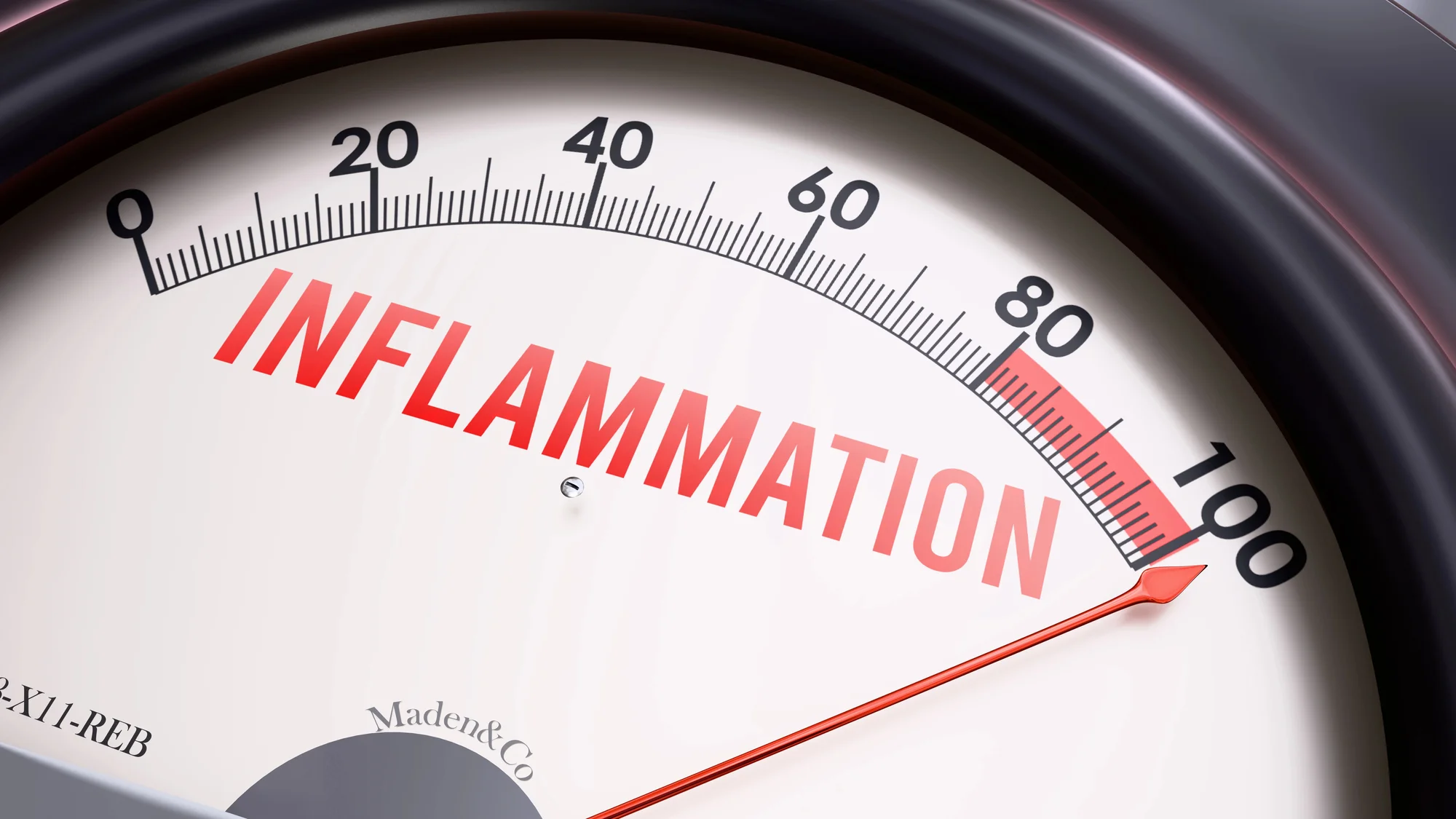
Chronic inflammation is an entirely different story. Here, the immune system no longer stops. It keeps sending alarm signals even when the threat has gone, or without any real threat. This prolonged immune response keeps the body in a permanent, low-intensity inflammatory state: what’s known as low-grade inflammation, or silent inflammation, because it smoulders without fever and without visible signs. And it’s precisely this silent, invisible character that makes it a major risk factor.[1]
What Are the Most Common Causes of Chronic Inflammation?
Chronic inflammation is rarely the result of a single factor. It is an accumulation of imbalances that progressively keeps your immune system on alert.[1]
An immune system that goes off the rails. Sometimes, the immune response no longer stops. This persistent activation damages tissues and creates fertile ground for many conditions. In immune-mediated inflammatory diseases, such as rheumatoid arthritis, ankylosing spondylitis, psoriatic arthritis, Crohn’s disease or ulcerative colitis, the immune system turns against the body’s own tissues. Chronic inflammation then lies at the very heart of the disease.
Exposure to everyday irritants. Cigarettes, ultra-processed foods, excess sugar and alcohol keep the immune system in a state of permanent vigilance. They feed a low-grade inflammatory state without you even realising it.
Oxidative stress, an imbalance between free radicals and the body’s capacity to neutralise them, adds to cellular damage. It is fuelled by a poor diet, lack of physical activity, smoking and a diet low in fibre and in fresh plant foods.
Chronic stress and the gut may be among the most underestimated causes. When stress lasts, immune cells become less responsive to cortisol, the hormone that normally calms inflammation.[3] Stress also makes the gut barrier more permeable, sometimes called leaky gut.[4] The gut microbiota can become imbalanced, and bacterial fragments and inflammatory signals can reach the bloodstream. Taking care of your digestive tract is therefore one important way of fighting inflammation.
{{cta}}
What Are the Symptoms of Chronic Inflammation?
The symptoms of chronic inflammation resemble so many others. We dismiss them as trivial. And meanwhile, the inflammation keeps doing its work in silence.
In its acute form, the five cardinal signs are easy to identify: redness, swelling, heat, pain, loss of function. In chronic low-grade inflammation, they are usually absent or diffuse. Chronic pain often affects the back or joints without a clear diagnosis.
The discreet signals not to ignore: persistent fatigue, recurring digestive disorders, skin conditions such as chronic eczema, diffuse muscle pain, insomnia, unexplained weight gain, frequent infections. Together, they can form a coherent picture, that of a progressively established inflammatory state, but each of them can have other causes.
Chronic inflammation doesn’t stay confined to the tissues. Inflammatory signals, such as pro-inflammatory cytokines, reach the brain through the blood and the nerves, including the vagus nerve. They can cause fatigue, poor concentration, irritability, low mood and social withdrawal, a normal reaction known as sickness behaviour.[5] In some people with depression, inflammation seems to play a part, which may help explain why some depressions respond poorly to conventional treatments.[6]
What Are the Links Between Chronic Inflammation and Serious Diseases?
Chronic inflammation is one of the factors that favour the development and spread of cancer.[7] Long-lasting inflammation of an organ increases the risk of cancer there: chronic inflammatory bowel disease and colon cancer, chronic hepatitis and liver cancer, for example. Inflammation also accelerates cellular ageing, or senescence. Senescent cells release pro-inflammatory molecules, the SASP (senescence-associated secretory phenotype), which can sustain an environment that favours tumours.[8]
On the cardiovascular front, inflammation damages the walls of blood vessels and promotes atheromatous plaques. In the CANTOS trial, a drug that blocks an inflammatory cytokine reduced heart attacks and strokes without lowering cholesterol, a strong argument that inflammation itself plays a role.[9] Chronic inflammation also promotes insulin resistance, fertile ground for type 2 diabetes.[1]
Finally, with age, the body loses part of its ability to switch inflammation off. Researchers call this inflammaging, the chronic low-grade inflammation that accompanies ageing.[10] Ageing, chronic diseases and silent inflammation are built from the same building blocks. Acting against inflammation also means ageing better, or at least not ageing as fast.
How Do You Detect and Treat Chronic Inflammation?
This is often the first question people ask me. And it’s a legitimate one. If chronic inflammation is silent, how do you know if you’re affected?
The good news is that there are biological tests capable of measuring it. They aren’t perfect, but they provide valuable indications.
{{cluster}}
What Biological Tests Can Measure It?
A blood test can reveal an inflammatory state. The main markers are C-reactive protein (CRP, or its high-sensitivity version, hs-CRP), the sedimentation rate (ESR) and fibrinogen; interleukin-6 (IL-6) is mostly measured in research. CRP remains the most accessible marker: it is made by the liver in response to inflammation, and its high-sensitivity version detects the very low levels typical of low-grade inflammation.[11] A slightly raised level is a signal worth discussing with your doctor. If you have several of the symptoms mentioned here, ask about an inflammation check-up.
Which Foods and Habits Help Reduce Inflammation Naturally?
Your lifestyle habits have a real impact. Certain foods and habits feed the inflammatory state: ultra-processed foods, refined sugars, excess alcohol and smoking. A diet rich in fibre, fresh fruit and vegetables, pulses, nuts, olive oil, oily fish and spices such as ginger, saffron, chilli and cinnamon is a healthy foundation. The Mediterranean diet is the best-studied example of this kind of eating, but its effect on inflammation markers is debated: some meta-analyses find modest falls in CRP and IL-6, with very variable results from one trial to another.[12] It should not be seen as an anti-inflammatory treatment.
Among natural compounds, d-limonene, the main molecule of orange peel, is the focus of my research. In cell cultures and in rats, it calmed inflammation.[8, 13] In healthy older adults, orange peel extract taken with a balanced diet was followed by a fall in IL-6,[13] and in the RISTOMED study, the d-limonene group also saw falls in fibrinogen, blood sugar, insulin and insulin resistance (HOMA-IR), markers linked to cardiovascular and metabolic risk.[14] These are encouraging results in healthy people, which do not yet show an effect on a disease. Omega-3 from oily fish have modest effects, mainly on pain in rheumatoid arthritis.[15] Curcumin, often presented as an anti-inflammatory, is unstable and poorly absorbed, and no robust double-blind trial has confirmed its benefits.[16]
Moderate movement is a powerful natural anti-inflammatory practice. Contracting muscles release myokines, messenger molecules with anti-inflammatory effects, and insulin sensitivity improves.[18] About 30 minutes of walking a day is a good start. Consistency is what matters most.
What Medical Treatments Are Available?
Corticosteroids and non-steroidal anti-inflammatory drugs (NSAIDs) are effective against flares. Their long-term use carries risks, such as stomach, kidney and heart problems for NSAIDs, and requires medical supervision.[19] They relieve inflammation without always treating its cause. For inflammatory diseases such as rheumatoid arthritis, Crohn’s disease or ulcerative colitis, disease-modifying drugs and biologic therapies, such as TNF-α inhibitors (infliximab, adalimumab), have transformed patients’ lives.[20] They increase the risk of infections and can reactivate tuberculosis, which is why screening and close medical monitoring are essential.[21]
Sources
- Furman D et al. Chronic inflammation in the etiology of disease across the life span. Nature Medicine, 2019;25(12):1822-1832. DOI 10.1038/s41591-019-0675-0. pubmed.ncbi.nlm.nih.gov
- Medzhitov R. Inflammation 2010: new adventures of an old flame. Cell, 2010;140(6):771-776. DOI 10.1016/j.cell.2010.03.006. doi.org
- Cohen S et al. Chronic stress, glucocorticoid receptor resistance, inflammation, and disease risk. PNAS, 2012;109(16):5995-5999. DOI 10.1073/pnas.1118355109. pubmed.ncbi.nlm.nih.gov
- Vanuytsel T et al. Psychological stress and corticotropin-releasing hormone increase intestinal permeability in humans by a mast cell-dependent mechanism. Gut, 2014;63(8):1293-1299. DOI 10.1136/gutjnl-2013-305690. pubmed.ncbi.nlm.nih.gov
- Dantzer R, O’Connor JC, Freund GG, Johnson RW, Kelley KW. From inflammation to sickness and depression: when the immune system subjugates the brain. Nature Reviews Neuroscience, 2008;9(1):46-56. DOI 10.1038/nrn2297. pubmed.ncbi.nlm.nih.gov
- Osimo EF, Baxter LJ, Lewis G, Jones PB, Khandaker GM. Prevalence of low-grade inflammation in depression: a systematic review and meta-analysis of CRP levels. Psychological Medicine, 2019;49(12):1958-1970. DOI 10.1017/S0033291719001454. discovery.ucl.ac.uk
- Coussens LM, Werb Z. Inflammation and cancer. Nature, 2002;420(6917):860-867. DOI 10.1038/nature01322. doi.org
- d’Alessio PA, Béné MC. AISA can control the inflammatory facet of SASP. Mechanisms of Ageing and Development, 2020;186:111206. DOI 10.1016/j.mad.2019.111206. doi.org
- Ridker PM et al. Antiinflammatory therapy with canakinumab for atherosclerotic disease (CANTOS). New England Journal of Medicine, 2017;377(12):1119-1131. DOI 10.1056/NEJMoa1707914. eurekalert.org
- Franceschi C, Garagnani P, Parini P, Giuliani C, Santoro A. Inflammaging: a new immune-metabolic viewpoint for age-related diseases. Nature Reviews Endocrinology, 2018;14(10):576-590. DOI 10.1038/s41574-018-0059-4. doi.org
- Pearson TA et al. Markers of inflammation and cardiovascular disease: application to clinical and public health practice. A statement for healthcare professionals from the CDC and the AHA. Circulation, 2003;107(3):499-511. DOI 10.1161/01.CIR.0000052939.59093.45. doi.org
- Schwingshackl L, Hoffmann G. Mediterranean dietary pattern, inflammation and endothelial function: a systematic review and meta-analysis of intervention trials. Nutrition, Metabolism & Cardiovascular Diseases, 2014;24(9):929-939. DOI 10.1016/j.numecd.2014.03.003. pubmed.ncbi.nlm.nih.gov
- d’Alessio PA, Ostan R, Bisson JF, Schulzke JD, Ursini MV, Béné MC. Oral administration of d-limonene controls inflammation in rat colitis and displays anti-inflammatory properties as diet supplementation in humans. Life Sciences, 2013;92(24-26):1151-1156. DOI 10.1016/j.lfs.2013.04.013. doi.org
- Ostan R, Béné MC, Spazzafumo L, et al., d’Alessio PA. Impact of diet and nutraceutical supplementation on inflammation in elderly people. Results from the RISTOMED study, an open-label randomized control trial. Clinical Nutrition, 2016;35(4):812-818. DOI 10.1016/j.clnu.2015.06.010. doi.org
- Senftleber NK et al. Marine oil supplements for arthritis pain: a systematic review and meta-analysis of randomized trials. Nutrients, 2017;9(1):42. DOI 10.3390/nu9010042. pubmed.ncbi.nlm.nih.gov
- Nelson KM et al. The essential medicinal chemistry of curcumin. Journal of Medicinal Chemistry, 2017;60(5):1620-1637. DOI 10.1021/acs.jmedchem.6b00975. pmc.ncbi.nlm.nih.gov
- Anses, Vigil’Anses no. 17, “Curcuma et effets hépatiques”, June 2022. vigilanses.anses.fr
- Gleeson M et al. The anti-inflammatory effects of exercise: mechanisms and implications for the prevention and treatment of disease. Nature Reviews Immunology, 2011;11(9):607-615. DOI 10.1038/nri3041. research.birmingham.ac.uk
- NHS, “Non-steroidal anti-inflammatory drugs (NSAIDs)”. nhs.uk
- NICE, guideline NG100, “Rheumatoid arthritis in adults: management”. nice.org.uk
- Keane J et al. Tuberculosis associated with infliximab, a tumor necrosis factor α–neutralizing agent. New England Journal of Medicine, 2001;345(15):1098-1104. DOI 10.1056/NEJMoa011110. doi.org
You might be interested in this product
Anti-inflammatory capsules
«Inside-out» dietary supplement supports the integrity of the intestinal barrier and a balanced microbiome, helping to manage stress. 2 to 4 capsules daily on an empty stomach. Content corresponds to a take for 2–3 weeks. European clinical study on 138 healthy patients aged 65–85, for 45 days.

TARIF
€
120.00
A European clinical study involving 138 healthy patients (ages 65–85).
FAQ
Everything you need to know before placing an order: simple and clear.
How Do You Cure Chronic Inflammation?
Chronic low-grade inflammation doesn’t disappear in a few days with a miracle medicine. It’s an imbalance built over years, which calls for a comprehensive, lasting approach: eat more fibre, vegetables and fruit and fewer ultra-processed foods; move regularly and moderately; address chronic stress; sleep enough; stop smoking; look after your gut microbiota with fibre and fermented foods; and see a doctor for a blood test and, if needed, treatment. Acting early gives the body the best chance to regain balance, although some damage, once established, cannot be undone.[1]
What’s the Fastest Way to Reduce Chronic Inflammation?
There is no instant solution. Changes in diet and activity are among the quickest levers: in the RISTOMED study, healthy older adults saw inflammation markers fall after 56 days of a balanced diet, with further falls in fibrinogen, blood sugar and insulin in the group that also took d-limonene. Regular moderate exercise also has anti-inflammatory effects. How quickly you see results depends on your starting point and on keeping the habits.[14, 18]
What Is the Most Common Cause of Chronic Inflammation?
There is rarely a single cause. Research points to a combination of factors: smoking, a diet rich in ultra-processed foods and low in fibre, inactivity, excess weight, poor sleep, chronic stress and social isolation. In my view, chronic stress combined with a poor diet is one of the most widespread combinations: stress makes immune cells less responsive to cortisol and the gut barrier more permeable, while a low-fibre diet disturbs the gut microbiota. This is why medicines alone are not enough: the way of life that fuels inflammation also needs attention.[1, 3]
What Are the Possible Complications of Chronic Inflammation?
Over the long term, chronic low-grade inflammation contributes to cardiovascular disease (heart attack, stroke), type 2 diabetes through insulin resistance, some cancers, neurodegenerative diseases such as Alzheimer’s, depression in some people, and accelerated ageing with fatigue and frailty. It is a contributing factor, not the only cause. Chronic inflammation is not a simple discomfort: it is a signal that deserves attention.[1, 10]
Latest posts
Did you enjoy this latest article? If so, you might be interested in this selection.






Ready to slow down the aging process?
Sign up for our newsletter and join the thousands of people who follow us to regain energy, vitality, and well-being.

Your cart summary
Product Name
$0
$0
-
Thank you! Your submission has been received!
Oops! Something went wrong while submitting the form.
+
Success message won't be visible to user. Coupon title will be listed below if it's valid.
Coupon1
Coupon2
Success message won't be visible to user.
Error message won't be visible to user.