
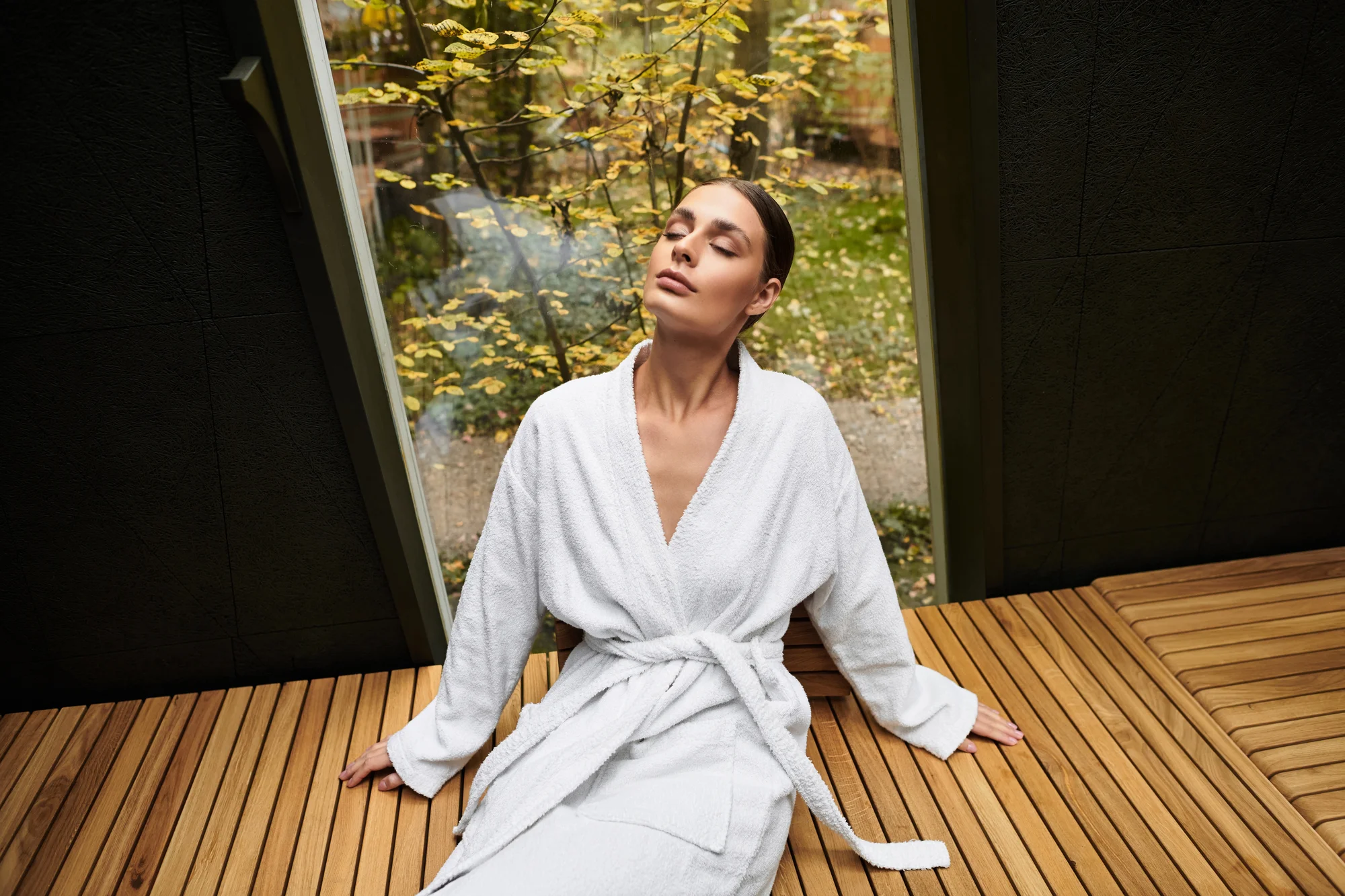
Are you looking for concrete tips to manage daily stress? You're not alone. In France, one in three people say they regularly feel overwhelmed, tensed, and exhausted — without knowing how to find lasting relief.
Managing your stress on a daily basis is nevertheless a skill that can be learned. It isn't a question of willpower. It's a question of the right methods. Once stress takes hold, it ends up affecting everything: your sleep, your health, your relationships, your quality of life.
The good news: there are now natural approaches with scientifically proven effectiveness for lasting daily stress management. No medication. No need to turn your life upside down.
In this article, I'll share the concrete techniques that really work to manage stress day after day.

Key Takeaways
- Chronic stress can be reversed with the right natural approaches.
- Consistency is key: breathing exercises, daily walks, and a regular sleep schedule.
- Diet, sleep, and gut microbiota are your best allies in combating stress.
- If these measures are no longer enough, seek help immediately: see a doctor, a psychologist, or schedule a telemedicine consultation.
Why is chronic stress so dangerous for your health?
Stress, in itself, is not your enemy. It's a natural, useful reaction of your body in the face of danger. The problem is when it doesn't stop.
When stress settles in over the long term, your body continuously secretes cortisol. This cortisol ends up weakening your gut barrier, compromising your immune system, and fueling silent chronic inflammation. It lays the groundwork for real diseases: cardiovascular disorders, depression, even certain cancers.
What's the difference between acute and chronic stress?
Acute stress is your heart racing when you miss your train. Intense, brief, possibly useful. It fades quickly.
Chronic stress is that constant pressure linked to a work overload or ongoing worries, lingering conflicts, a diffuse anxiety with no clear cause. Your body stays in a prolonged state of alert, never finding rest. That's where the damage begins.
What physical and emotional signals show your body is overwhelmed?
Your body is talking to you. Here are the signs of stress not to ignore:
- Frequent headaches, neck tension, chronic fatigue
- Sleep disturbances, recurring infections, heart palpitations
- Irritability, difficulty concentrating, obsessive thoughts
- Feeling constantly overwhelmed, wanting to withdraw
If you recognize yourself in several of these symptoms, your body is asking you to change something.
{{cocon}}
What are the most effective natural approaches to reduce daily stress?
There's no miracle cure for stress. But there are natural methods with scientifically proven effectiveness. The key: regular practice. Not perfection — consistency.
How does deep breathing concretely act on stress?
It's the simplest, most underrated tool there is.
When you're stressed, your breathing becomes fast and shallow. Deep breathing does exactly the opposite: it activates the parasympathetic system, the one responsible for relaxation and repair.
Heart coherence breathing is particularly effective: indicatively 3 seconds inhaling, 7 seconds exhaling, 5 minutes, 2-3 times a day. Yet substantially at your own rythm. Studies show it significantly reduces cortisol levels and stabilizes heart rate. Sophrology and progressive muscle relaxation work on the same principle: teaching your body to identify areas of tension and release them voluntarily, until you achieve a lasting mental and physical balance.
It's like having a built-in anti-stress switch in your body. You just need to learn how to activate it.
How do you practice mindfulness meditation as a beginner?
Mindfulness isn't about emptying your mind. It's about bringing your attention back to the present moment, without judgment.
5 minutes a day is enough to start — in the morning, before the stressful day begins. Sit down, observe your breath. When a thought arises, notice it and return to your breathing. Studies show that 8 weeks of regular practice significantly reduce anxiety and improve sleep quality.
Picture your mind as a sky. Stressful thoughts are clouds. Meditation teaches you to stop identifying with them, just let them pass.
Why does regular physical exercise remain the most powerful natural anti-stress tool?
Regular physical activity acts on everything at once: it boosts dopamine, serotonin, and endorphins, regulates cortisol, improves sleep, and strengthens the immune system. During exercise, muscles produce myokines — substances that act as genuine natural antidepressants and reduce inflammation, also ameliorating brain activity.
You don't need to run a marathon. 20-30 minutes of walking 5 times a week is enough. Yoga, swimming, dancing — any movement practiced regularly counts. Consistency beats intensity.
Which plants and natural supplements are recognized for calming stress?
- Ashwagandha: reduces cortisol levels and chronic anxiety
- Rhodiola rosea: an ideal adaptogen for work-related stress and mental fatigue
- Magnesium: often deficient in stressed people, it reduces irritability and muscle tension
- Valerian, passionflower, lemon balm: gentle plants for sleep disturbances and mild anxious states
Always consult your general practitioner before taking any supplements. Natural doesn't always mean free of interactions or counterindications.
{{cta}}
How do you build an effective, natural anti-stress routine?
A routine is the difference between enduring your day and steering it. It doesn't need to be perfect. It just needs to be consistent.
Why is sleep the key to better stress management?
Without quality sleep, no other management technique will work in the long run. Melatonin and cortisol work in opposition: when stress keeps cortisol elevated in the evening, it blocks sleep onset. The result: you can't fall asleep. And the next day, you start exhausted and even more vulnerable to stress. A vicious cycle that is hard to break without consciously acting on it.
To achieve this:
- Go to bed and wake up at fixed times, even on weekends — this is the single most powerful lever for stabilizing your circadian rhythm
- Cut off screens 1 hour before bed — blue light disrupts melatonin secretion
- Avoid caffeine after 2pm and alcohol in the evening
- Practice a calming ritual before bed: reading, deep breathing, a warm bath
7 to 9 hours of quality sleep is the essential foundation of any lasting stress management.
How do you manage stress at work and organize your day effectively?
Work-related stress is one of the leading causes of absenteeism worldwide. Yet you have more power to act than you think.
- List 3 priorities the night before, never in the morning under pressure
- Build in 5-to-10-minute breaks every 90 minutes — your brain needs them to maintain focus without burning out
- Avoid multitasking — it jeopardizes attention and increases your stress level
- Set a professional disconnection time. Evening emails can wait. Work-life balance isn't a luxury, it's a biological necessity
- Nurture your social connections: social support is one of the most powerful protective factors against chronic stress. A shared meal, a sincere phone call — these moments matter far more than we think
When natural methods aren't enough, what should you do?
When should you really worry about your stress level?
Seek help when stress symptoms persist for more than 4 to 6 weeks, when sleep remains persistently altered, when anxiety is constant, or when obsessive thoughts appear . This isn't a matter of willpower. It's time to act without waiting.
Who should you turn to when you can't manage on your own?
- Your general practitioner: always the first step
- A psychologist: for cognitive behavioral therapy (CBT), recognized for managing stress and anxiety
- A psychiatrist if stress has evolved into depression or a severe anxiety disorder
- Teleconsultation: fast, simple, sometimes covered by health insurance
Don't stay alone. Asking for help is a smart way to take care of your mental health.
You might be interested in this product
Anti-inflammatory capsules
«Inside-out» dietary supplement supports the integrity of the intestinal barrier and a balanced microbiome, helping to manage stress. 2 to 4 capsules daily on an empty stomach. Content corresponds to a take for 2–3 weeks. European clinical study on 138 healthy patients aged 65–85, for 45 days.

TARIF
€
120.00
A European clinical study involving 138 healthy patients (ages 65–85).


FAQ
Everything you need to know before placing an order: simple and clear.
What is the 5-4-3-2-1 method?
It's a sensory grounding technique to stop rising anxiety. Facing a stressful situation, observe: 5 things you see, 4 you touch, 3 you hear, 2 you smell, 1 you taste. This sequence interrupts the anxiety circuit and brings your nervous system back to the here and now. It can be used anywhere — at the office, on public transport, before an exam.
What is the 3-3-3 rule for stress?
A quick refocusing technique: name 3 things you see, 3 sounds you hear, move 3 parts of your body. In under two minutes, it short-circuits the automatic stress response. Discreet and usable anywhere, especially to manage stress at work.
How do you manage everyday stress?
Primarily: daily deep breathing, regular physical activity, a stable sleep routine, balanced nutrition, limiting stimulants. And above all: be kind to yourself. Inner self-compassion is also a tool for managing daily stress.
What is the 5-10-15 method?
An anti-stress time management approach: 5 minutes to start a difficult task without pressure, 10 minutes of active break after each intense block, 15 minutes of wind-down at the end of the day before returning to your personal life. Simple, effective, particularly suited to work-related stress.
Latest posts
Did you enjoy this latest article? If so, you might be interested in this selection.
Ready to slow down the aging process?
Sign up for our newsletter and join the thousands of people who follow us to regain energy, vitality, and well-being.

Your cart summary
Product Name
$0
$0
-
Thank you! Your submission has been received!
Oops! Something went wrong while submitting the form.
+
Success message won't be visible to user. Coupon title will be listed below if it's valid.
Coupon1
Coupon2
Success message won't be visible to user.
Error message won't be visible to user.