

What if eating better started with a few changes on your plate, without turning your life upside down? Between lists of “forbidden” foods and promises about superfoods, it’s easy to lose track of what actually matters.
An anti-inflammatory diet is mostly built on simple habits: more plants, beans and lentils, whole grains and a good variety of fats. The Mediterranean diet is a useful model. The goal is a balanced way of eating that you enjoy enough to keep.
Here’s how to move from theory to your next meals, with concrete guides and without expecting a single food to do all the work.

Key Takeaways
- Add more plants to every meal.
- Eat beans or lentils twice a week.
- Choose whole grains more often.
- Vary your proteins and oils.
- Make water your usual drink.
- Start with two small changes.
- Ill or on treatment? Get advice first.
What is an anti-inflammatory diet?
Picturing a strict regime and an endless shopping list? The term really describes a long-term way of eating. It favours foods and combinations that research has linked to better health and to certain markers of inflammation.
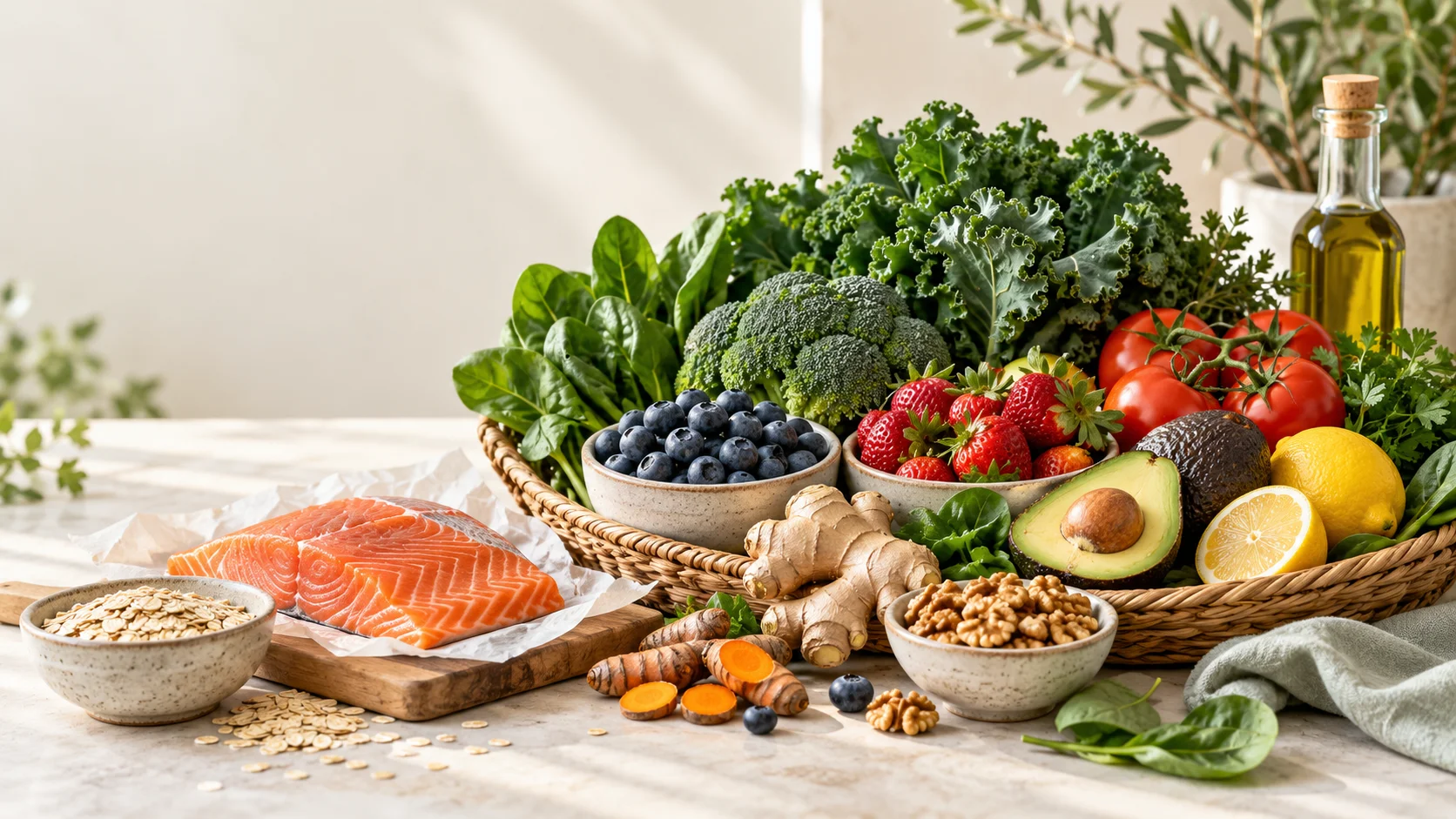
It looks a lot like the Mediterranean diet: vegetables, fruit, beans and lentils, whole grains, olive oil, nuts and fish take centre stage, while sugary drinks and processed meats become occasional.
Is inflammation always a bad thing?
Cut your finger and the area turns red? Acute inflammation is part of the body’s defence and repair system. It rises quickly, then settles.
Chronic inflammation, on the other hand, lingers at a low level. It has many causes, and diet doesn’t explain everything. Tiredness, bloating or aches alone are not enough to conclude that you have “silent inflammation”.[1]
What does the research on the Mediterranean diet show?
Can your plate really make a difference? A 2021 review of clinical trials found favourable effects of the Mediterranean diet on some markers of inflammation. Results varied between markers and studies, and the drop in C-reactive protein was not statistically certain in the main analysis.[2]
The sensible takeaway is to focus on a set of habits, without promising everyone the same result. A lower blood marker does not automatically mean less pain or a cured disease.
Which foods should you eat every day?
What should go in your basket this week? Start with familiar foods. You don’t need expensive powders or hard-to-find ingredients.
How can you eat more fruit and vegetables?
Lunch often short on veg? Add a portion you like: roasted carrots, tomatoes, courgettes, green beans or a homemade soup.
The UK guideline is at least five portions of fruit and vegetables a day in total. Vary colours and cooking methods: fresh, plain frozen or tinned produce all count and help you stay within budget.[3]
Berries have their place, but so do apples and oranges. Your basket doesn’t need to become a superfood contest.
{{cta}}
Why choose beans, lentils and whole grains?
Looking for a filling, easy meal? Think lentils, chickpeas and beans. They provide fibre and can partly replace animal protein in your meals. France’s national guidelines recommend pulses at least twice a week.[10]
Whole grains are also worth choosing more often: wholemeal bread, porridge oats, brown rice or wholewheat pasta.[3] If you rarely eat them, start small, for example by alternating white and brown rice. If you have digestive problems, adjust the amounts with a professional rather than forcing yourself.
Which fats and proteins should you choose?
Wondering whether to cut out fat or choose better fats? Keep some fat in your meals and vary the sources, favouring unsaturated oils such as olive or rapeseed oil.[3] A small handful of unsalted nuts a day, unless you have an allergy, is another easy habit.[10]
For fish, aim for two portions a week, one of them oily, such as sardines, mackerel or salmon, which provide omega-3 fats.[4] Eggs, poultry, tofu and pulses help you vary your proteins.
{{cocon}}
Which foods should you limit, without banning them?
Does one biscuit undo all your efforts? It’s your habits that count, far more than a single occasion.
Health guidelines encourage cutting down on sugary drinks, foods high in fat, sugar or salt, ultra-processed foods and alcohol, and limiting red and processed meat.[3, 5] Simple swaps make this easier:
What does a day of anti-inflammatory meals look like?
Picture a busy day: you want to eat well, but you don’t have an hour for every meal. Here’s an example to adapt to your appetite, tastes and needs.
This plan is an idea, not a prescription. Prefer a savoury breakfast? Try wholemeal toast with an egg and some fruit. For a vegetarian dinner, swap the fish for tofu or chickpeas and vary your proteins over the week.
How do you start with little time and a small budget?
Home late and the fridge looks empty? A few store-cupboard staples save you from starting from scratch every evening.
Should you take supplements?
Can a capsule replace a varied diet? No. Supplements replace neither balanced meals nor prescribed treatments. Whether one is useful depends on the product, its composition, your situation and the evidence available.[8]
If you’d like to know more about the orange-peel extract studied in RISTOMED, you can discover AISA Moleculum Capsules, their composition and directions for use. This doesn’t mean you need a supplement to adopt the habits described here.
When should you get personalised advice?
Do you have persistent pain, significant digestive problems or an existing diagnosis? Ask your doctor or a registered dietitian to tailor your diet.
Needs differ depending on your condition, your treatments and your nutritional status. Cutting out several foods without support can make meals harder and less varied.
Sources
- Heart & Stroke Foundation of Canada, “The anti-inflammatory diet”. heartandstroke.ca
- Koelman L. et al., “Effects of Dietary Patterns on Biomarkers of Inflammation and Immune Responses: A Systematic Review and Meta-Analysis of Randomized Controlled Trials”, Advances in Nutrition, 2021. PMC8803482
- NHS, “Eating a balanced diet”. nhs.uk
- NHS, “Fish and shellfish”. nhs.uk
- NHS, “Red meat and the risk of bowel cancer”. nhs.uk
- NIH, NCCIH, “Turmeric: Usefulness and Safety”. nccih.nih.gov
- NIDDK, “Diagnosis of Celiac Disease”. niddk.nih.gov
- NIH, NCCIH, “Using Dietary Supplements Wisely”. nccih.nih.gov
- Ostan R., Béné M.C., … D’Alessio P.A., “Impact of diet and nutraceutical supplementation on inflammation in elderly people. Results from the RISTOMED study, an open-label randomized control trial”, Clinical Nutrition 35 (2016) 812–818. doi:10.1016/j.clnu.2015.06.010
- Santé publique France (French national public health agency), Manger Bouger nutrition guidelines. mangerbouger.fr
You might be interested in this product
Anti-inflammatory capsules
«Inside-out» dietary supplement supports the integrity of the intestinal barrier and a balanced microbiome, helping to manage stress. 2 to 4 capsules daily on an empty stomach. Content corresponds to a take for 2–3 weeks. European clinical study on 138 healthy patients aged 65–85, for 45 days.

TARIF
€
120.00
A European clinical study involving 138 healthy patients (ages 65–85).


FAQ
Everything you need to know before placing an order: simple and clear.
What is the most anti-inflammatory food?
There is no universal ranking that names one food as the best for everyone. Research mostly looks at overall eating patterns. Variety and consistency are better guides than eating large amounts of a single ingredient.[1, 2]
What is a good anti-inflammatory breakfast?
Try porridge oats with plain yoghurt, a piece of fruit and a few nuts. A savoury option such as wholemeal toast with an egg and some fruit works too. Adjust the amounts to your appetite: no recipe is compulsory.
Should I cut out gluten and dairy?
Not as a rule. Healthy-eating guidelines include whole grains and dairy foods. An allergy, coeliac disease or an intolerance does need an individual approach. If you suspect coeliac disease, see a doctor before cutting out gluten, as doing so can affect the diagnostic tests.[3, 7]
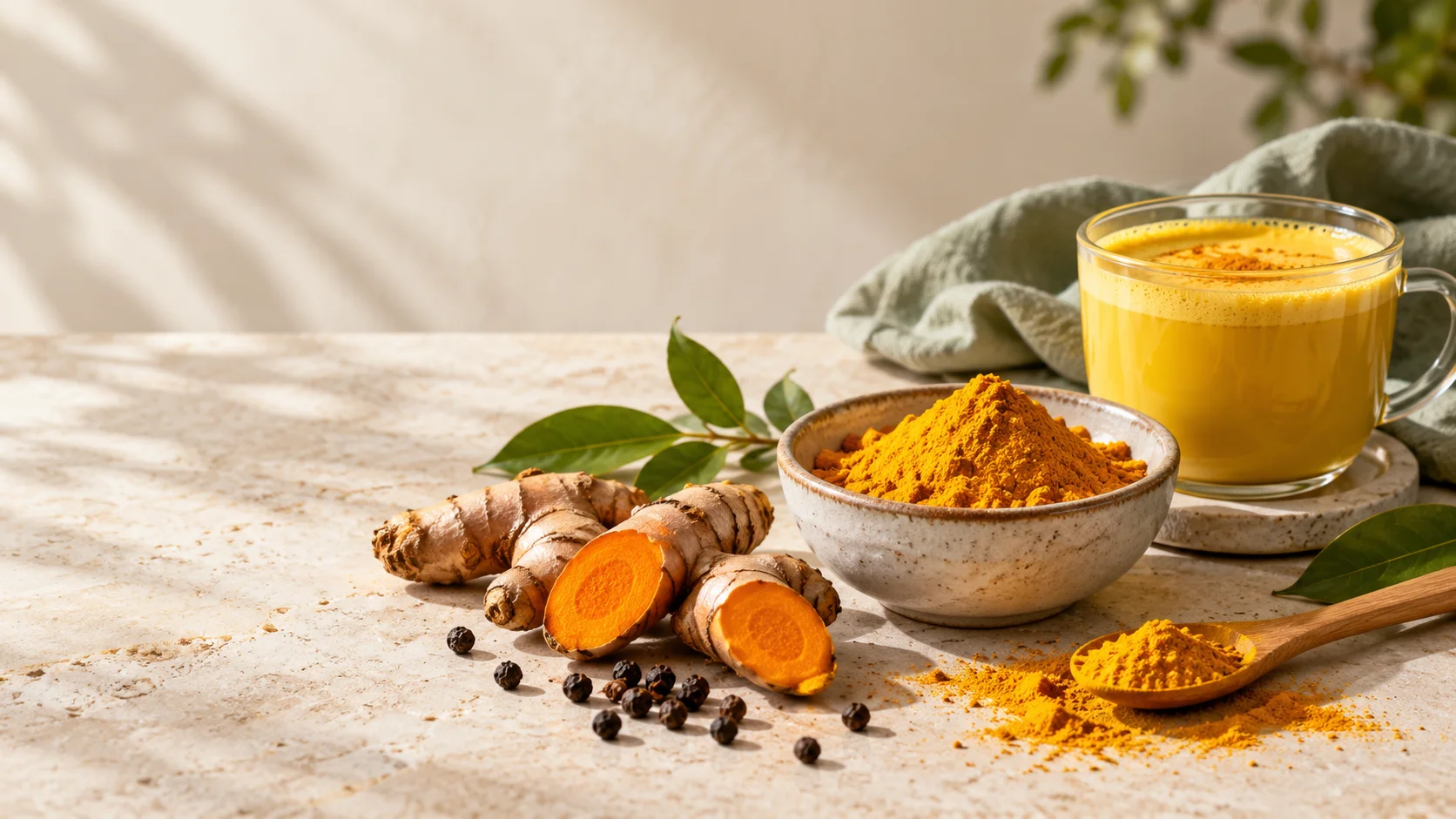
Is turmeric enough to reduce inflammation?
A pinch of turmeric can flavour your food, but it does not replace a balanced diet or a treatment. A kitchen spice and a concentrated supplement are not the same thing, and some turmeric supplements have been linked to liver problems.[6]
How long does an anti-inflammatory diet take to work?
Will an anti-inflammatory diet help me lose weight?
Not automatically. This approach is about the quality of what you eat. Weight depends on your intake, your needs and your circumstances. You can improve your plate without trying to eat less or lose weight.
Latest posts
Did you enjoy this latest article? If so, you might be interested in this selection.



Ready to slow down the aging process?
Sign up for our newsletter and join the thousands of people who follow us to regain energy, vitality, and well-being.

Your cart summary
Product Name
$0
$0
-
Thank you! Your submission has been received!
Oops! Something went wrong while submitting the form.
+
Success message won't be visible to user. Coupon title will be listed below if it's valid.
Coupon1
Coupon2
Success message won't be visible to user.
Error message won't be visible to user.